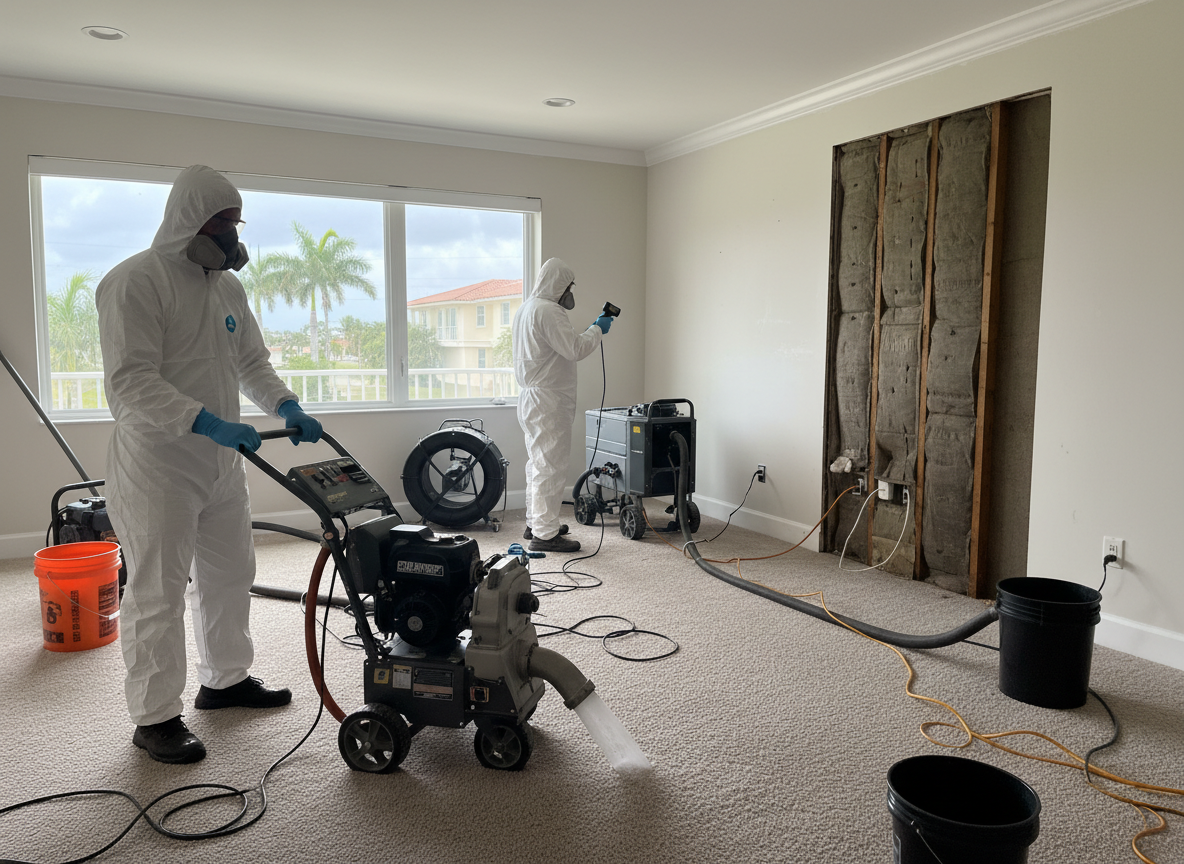
Surfside sits on a narrow coastal strip in Orange County where mild Mediterranean summers keep humidity elevated year-round. Older wood-frame homes built close to Surfside Beach often have raised foundations over sandy soil that drains slowly when water enters from roof leaks or appliance failures. Mitigation begins with isolating the source and removing standing water before salts from ocean air can corrode metal fasteners and wiring. Technicians map moisture in plaster walls and subfloors using meters, because hidden pockets behind cabinets or in HVAC returns can spread if left untreated in the consistent coastal moisture.
Once bulk water is extracted, dehumidifiers and air movers are staged to pull vapor from framing and insulation without forcing salt-laden air deeper into cavities. In Surfside bungalows near Pacific Coast Highway, access is often limited by narrow lots and shared walls with neighboring properties in Seal Beach, so containment barriers must be placed carefully to avoid disturbing adjacent units. Drying goals are set lower than inland jobs because the ambient air rarely drops below 60 percent relative humidity even on clear days. Monitoring continues daily until readings match unaffected areas, preventing callbacks when summer marine layers return.
Homeowners sometimes attempt to dry only visible surfaces, but the real risk lies in saturated particleboard under vinyl flooring or in ceiling joists above bathrooms. Leaving these wet allows cupping and mold within days, especially in the cool evenings typical along this stretch of coast. Proper mitigation includes removing baseboards for airflow, discarding porous materials that cannot be dried to standard, and documenting conditions for insurance adjusters who serve Orange County coastal claims. The address at 16281 Pacific Coast Hwy allows crews to reach jobs in Surfside and Sunset Beach within minutes regardless of time of day.
Technician insight
In Surfside, the thing that catches most people out with water damage mitigation is how the constant marine humidity and sandy soil keep crawlspaces and pier-and-beam homes damp long after the initial leak stops. Homeowners often run box fans themselves, but that just circulates salt air and pushes moisture into drywall before we arrive from the shop on Pacific Coast Hwy.
Crawlspace Saturation After Roof Leak
A Surfside home two blocks from the beach developed a slow roof leak during a marine layer storm. Water traveled along joists and pooled in the sandy crawlspace soil. Extraction and targeted drying of framing prevented mold growth that would have been accelerated by the area's steady coastal humidity. The structure dried to standard without removing any flooring.
How it works
- 1
Source Isolation
Locate and stop the water entry point using shutoffs and temporary barriers suited to Surfside plumbing layouts.
- 2
Standing Water Removal
Extract visible water from floors and cavities with portable pumps before it migrates into sandy subsoil.
- 3
Moisture Mapping
Use meters and infrared to identify hidden saturation in walls, subfloors, and crawlspaces common in older beach homes.
- 4
Drying and Monitoring
Deploy dehumidifiers and airflow equipment, checking readings daily until levels match unaffected sections of the property.
- 5
Material Assessment
Determine which items can be dried in place and which must be removed to prevent long-term issues from coastal humidity.
Pricing
Upfront quotes after on-site inspection; final cost depends on water volume, affected materials, and access constraints in older Surfside homes.