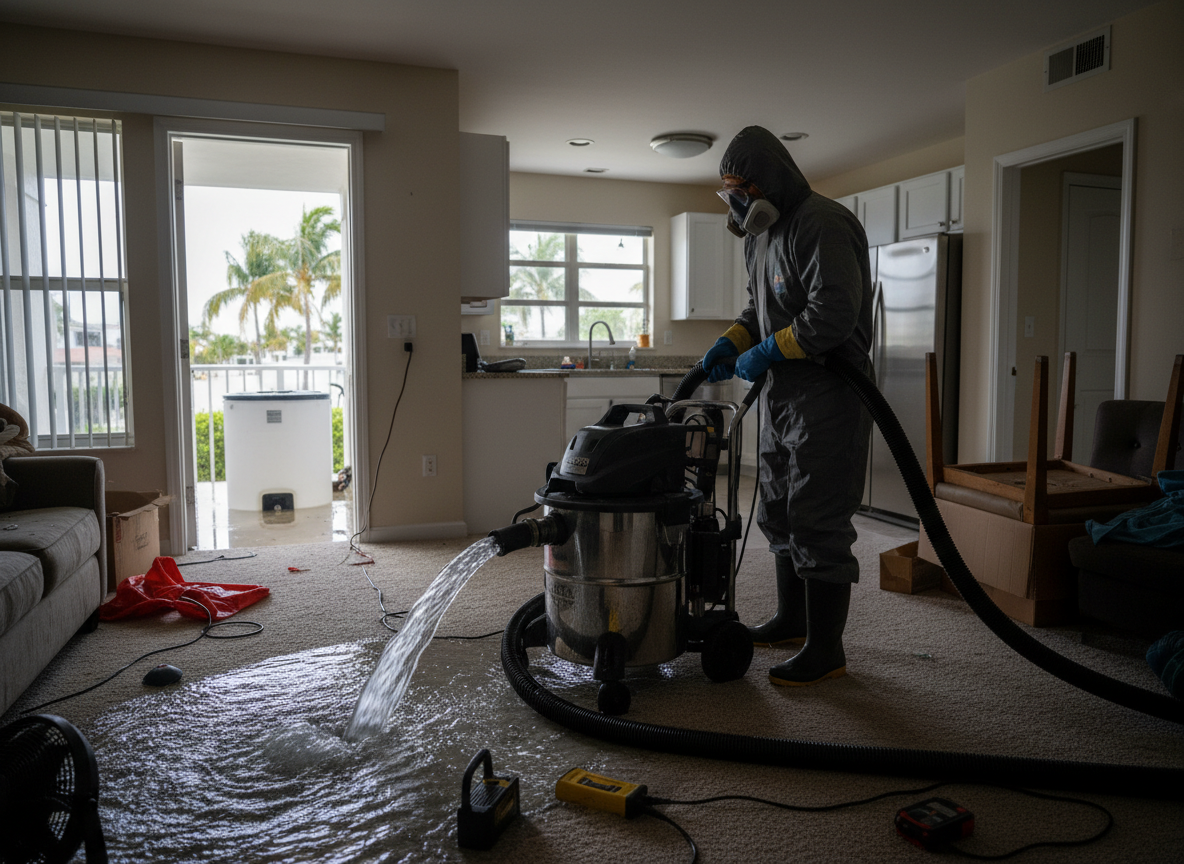
Surfside sits on a narrow strip between the Pacific and the wetlands that feed into Seal Beach and Sunset Beach. Homes here are mostly older single-story wood-frame structures built on raised foundations or concrete slabs. When a pipe bursts or a storm pushes water through the door, the mild coastal Mediterranean climate keeps temperatures moderate but humidity high even in summer. That combination slows natural evaporation and pushes moisture into subfloors and wall cavities faster than inland jobs. Extraction crews must move water out within the first few hours or risk hidden saturation along the slab edges where salt air has already corroded metal fasteners.
Equipment choice changes on the coast. Truck-mounted extraction units with high-CFM vacuums pull water from carpet and pad before it migrates into the particleboard underlayment common in 1960s and 1970s Surfside homes. For slab leaks, technicians use moisture meters to locate water that has wicked under vinyl or tile, then place air movers at low angles to force dry air across the concrete. Because summers stay cool, dehumidifiers must run longer cycles than in hotter inland areas; otherwise, relative humidity inside the structure climbs and mold begins on the north-facing walls that rarely see direct sun.
Orange County code requires proper disposal of extracted water when it contains sewage or high sediment loads from beach-adjacent flooding. Crews route discharge hoses to approved sanitary sewer cleanouts rather than storm drains that empty directly into the ocean near Surfside Beach. Homeowners along Pacific Coast Highway often have limited side-yard access, so portable extraction wands and stair-climbing units become necessary to reach lower levels without blocking the narrow residential streets.
Technician insight
In Surfside, the thing that catches most people out with rapid water extraction is how quickly moisture travels under the slab once it hits the cool concrete; the mild summers keep the ground temperature low, so water doesn't evaporate on its own the way it does farther inland near the hills.
Kitchen Slab Leak After Pipe Burst
Water from a failed supply line under the kitchen slab spread beneath vinyl tile in a 1970s Surfside home. Extraction units pulled the standing water, then low-profile drying mats were placed to draw moisture from the concrete without removing the cabinets. Follow-up readings confirmed the slab had returned to acceptable levels before any mold could establish in the salt-air environment.
How it works
- 1
Arrival and Safety Check
Technicians arrive 24/7 at the Surfside address, shut off water sources, and mark electrical hazards before any equipment enters the structure.
- 2
Standing Water Removal
High-volume pumps and extraction wands pull bulk water from floors, taking care around older wood subfloors common in Surfside homes.
- 3
Moisture Mapping
Infrared cameras and pin meters locate hidden saturation in walls and under tile, especially along the cooler north sides facing the ocean.
- 4
Targeted Drying Setup
Air movers and dehumidifiers are placed to account for the persistent coastal humidity that slows drying compared with inland Orange County jobs.
Pricing
Cost depends on water volume, number of rooms, and whether slab or subfloor extraction is required.