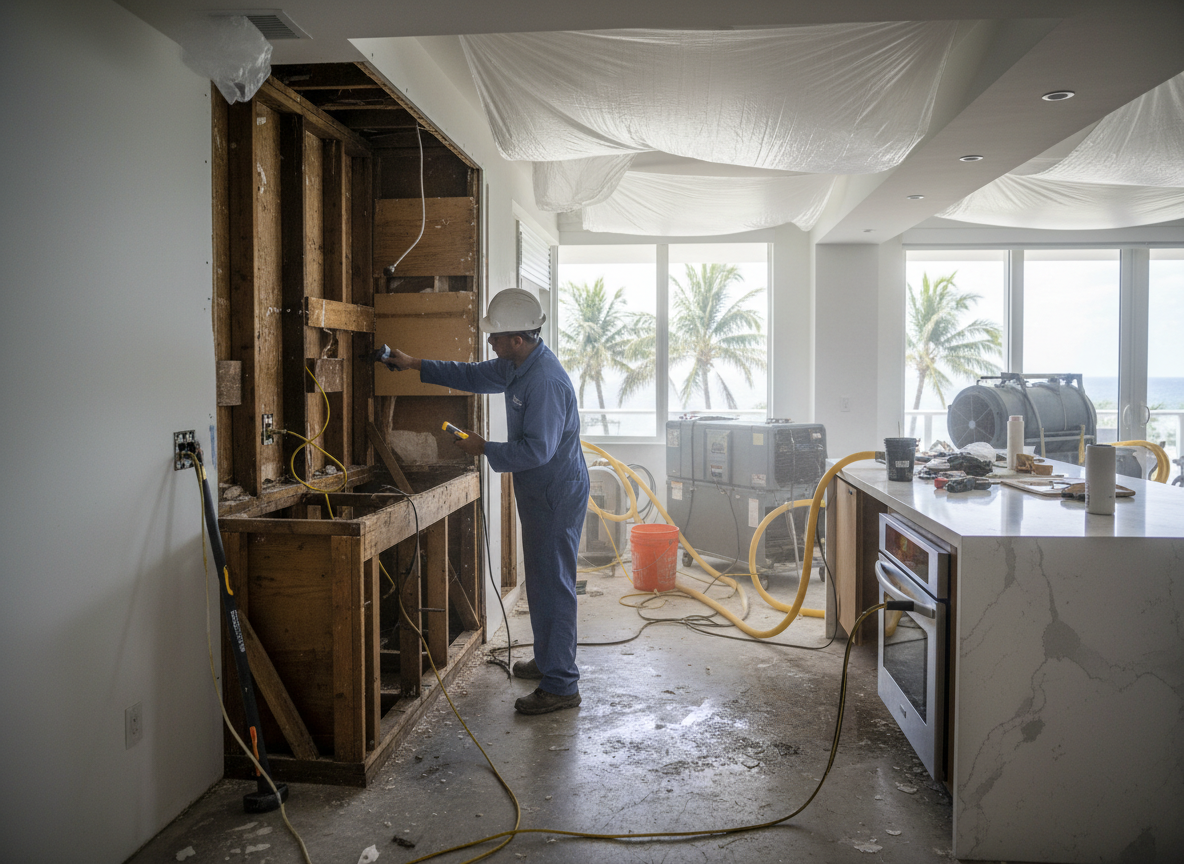
Surfside kitchens in homes along Pacific Coast Hwy often feature original cabinetry from the 1960s and 1970s that sits directly on concrete slabs or raised wood floors. When a dishwasher or sink supply line fails, water travels under toe kicks and into particleboard bases within hours. The mild coastal Mediterranean climate keeps outdoor temperatures moderate, but the constant humidity from Surfside Beach slows natural drying and raises the risk of hidden mold growth behind baseboards and under vinyl flooring common in Sunset Beach rentals.
Technicians must pull up sections of laminate or tile to reach saturated subfloors, then use moisture meters to map how far water has wicked into drywall behind lower cabinets. Orange County code requires removal of any porous material that cannot be fully dried within 48 hours, which means many jobs include partial cabinet replacement rather than simple drying. Salt air accelerates corrosion on copper and galvanized pipes under sinks, so a single leak often reveals multiple weakened joints that need attention before new flooring goes down.
Edge cases include ice maker lines on refrigerators that leak behind the unit into wall cavities shared with adjacent rooms. These require containment barriers to keep dust from spreading into living areas while we cut out affected drywall. Homeowners in Surfside sometimes attempt their own cleanup with box fans, but the ocean breeze introduces additional moisture that can push drying times past the point where secondary damage sets in.
Technician insight
In Surfside, the thing that catches most people out with Kitchen water damage repair is how quickly water travels under 1970s particleboard cabinets sitting on concrete slabs near Pacific Coast Hwy. The salt air has already thinned the supply lines, so one dishwasher leak often means two or three joints need replacing before we can close the floor back up.
Hidden Leak Under Kitchen Island
A homeowner near Surfside Beach noticed soft flooring in front of the sink. We found the supply line had been seeping for weeks, saturating the subfloor beneath the island and traveling into the adjacent wall. After extraction and targeted drying, we replaced the affected plywood and two lower cabinet panels, then reinstalled the flooring to match the original tile.
How it works
- 1
On-Site Assessment
Inspect all affected kitchen surfaces, measure moisture levels in floors and walls, and identify the source of the leak.
- 2
Water Extraction
Remove standing water and pull back affected flooring or cabinet bases to prevent further spread into subflooring.
- 3
Drying and Monitoring
Place commercial air movers and dehumidifiers, then return daily to check moisture readings until levels return to normal.
- 4
Repairs and Restoration
Replace damaged cabinetry sections, subflooring, and drywall, then reinstall flooring and reconnect appliances.
- 5
Final Walkthrough
Verify all moisture is gone and review completed work with the homeowner before equipment removal.
Pricing
Upfront quotes provided after inspection; cost depends on extent of hidden damage and materials involved.